
How to Wash Fleece Leg Warmers (and What Wears Them Out)
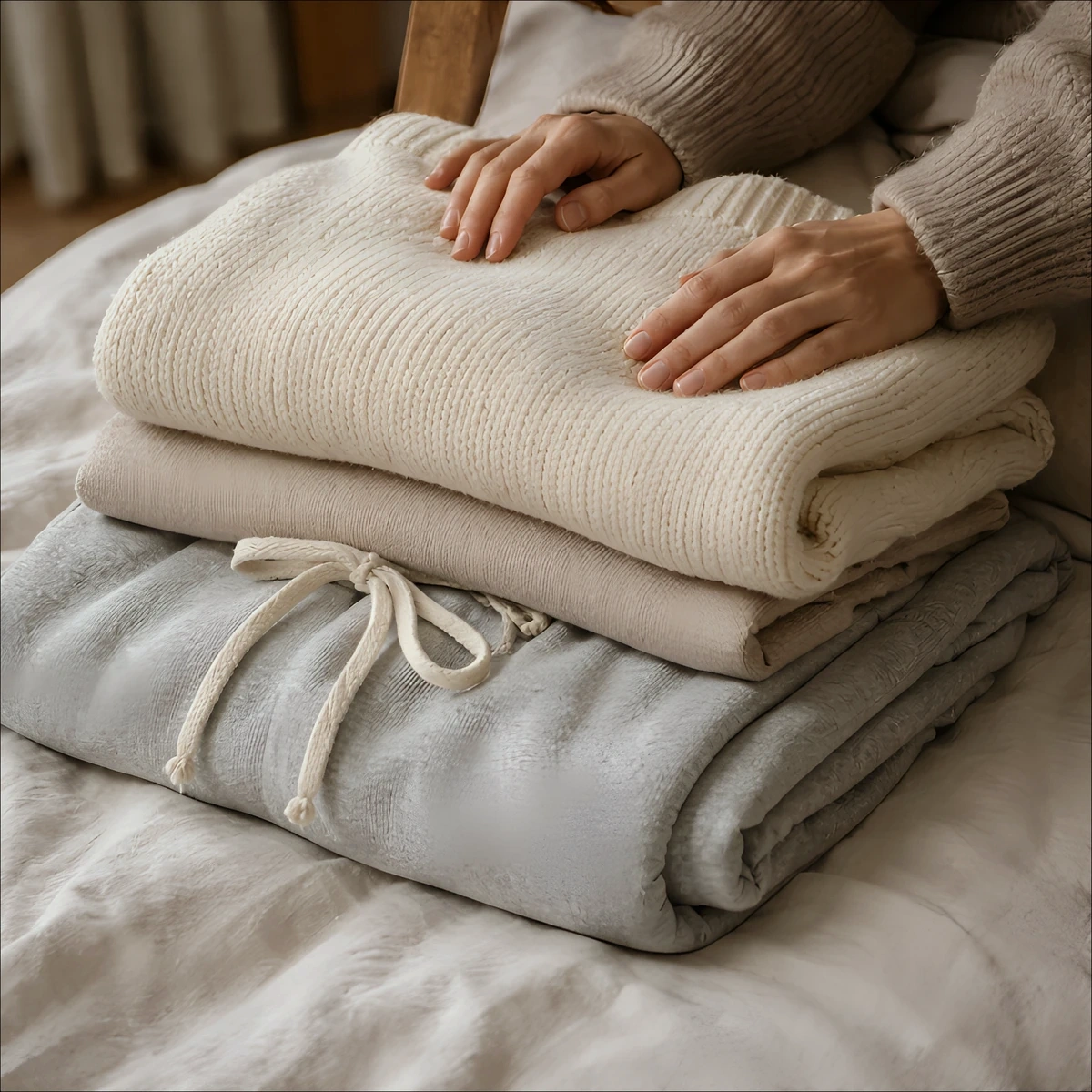
For our pair: wash inside out at 30°C on an appropriate short or gentle cycle, keep them away from zips and hooks, and skip the tumble dryer. All four are our own care recommendations.
We were going to tell you why heat ruins fleece. Then we went looking for the evidence and could not find any, so the second half of this article says something different instead: what the research actually measured, and where our own caution begins.
If a favourite pair has ever come out of the machine flatter than it went in, the question worth answering is not which temperature to fear, but what actually rubs the pile.
How to wash Snuggly Plush™ leg warmers
This is the care guidance we give for our plush over-the-knee pair. If you are looking after a different pair, follow whatever guidance came with that garment instead.
- Wash at 30°C. This is our care recommendation for this pair.
- Inside out, on a short or gentle programme, away from rough hardware. Not every quick cycle is a gentle one. Choose the programme to suit the garment and the load, and keep the pair clear of exposed zips, hooks and hook-and-loop fastenings.
- Skip the tumble dryer. We recommend air drying as a precaution, because tumble drying adds mechanical movement as well as heat and airflow. We have not measured whether this preserves the plush texture better.
- Air dry. Support the weight of the wet fabric rather than hanging all of it from the elasticated top.
All four are Snuggly Plush™ care recommendations for this pair. They are not presented here as results from the studies below. Everything that follows is either general caution or published research, and we have marked which is which. The three are not the same thing, and much of the fleece-care advice we read blurs them.
How do you wash leg warmers without unnecessary wear?
Follow the guidance for the pair you own, then avoid unnecessary mechanical stress where practical.
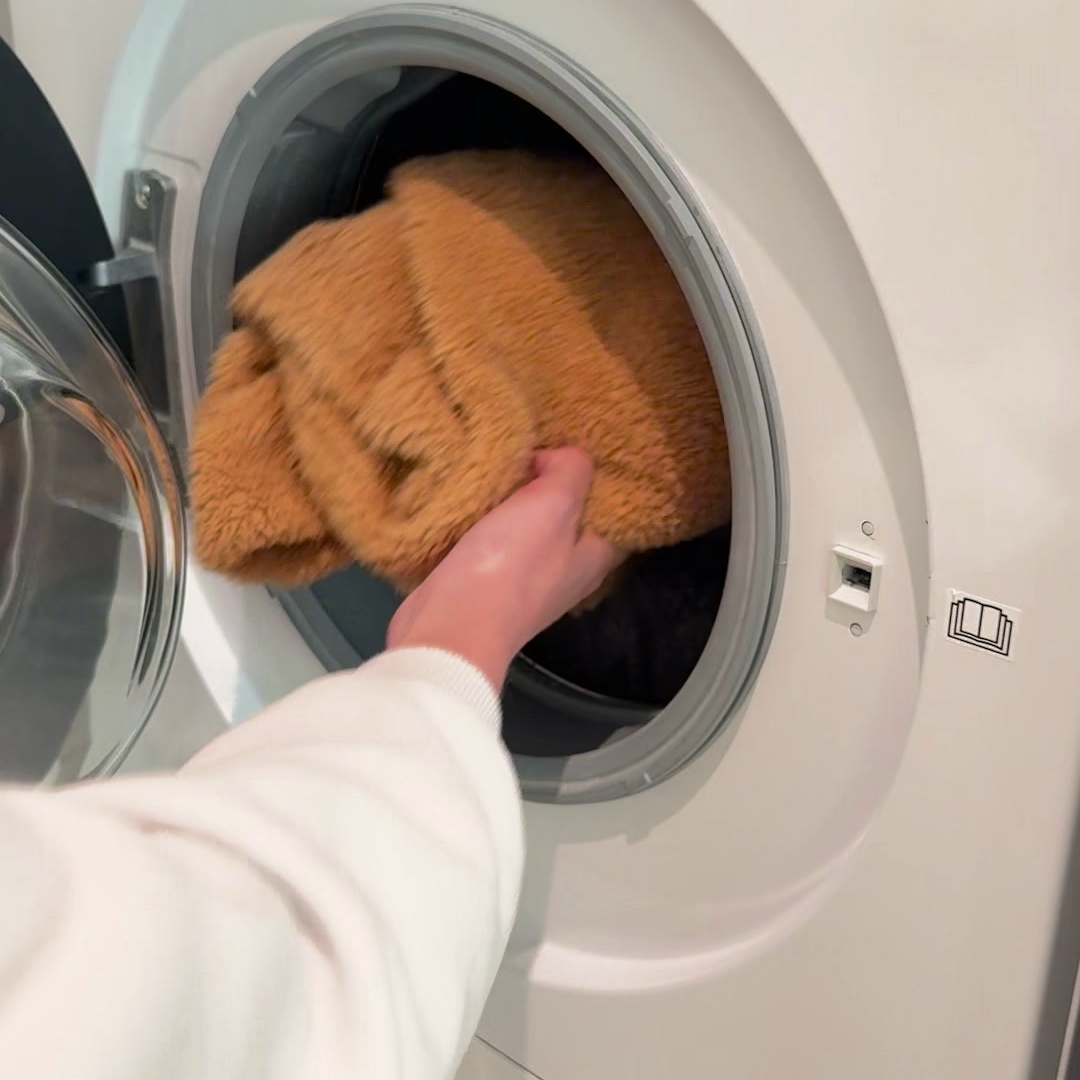
- Turn them inside out. This may help shield the surface you can see from direct contact with zips or rougher items in the load. The studies cited here did not test this step, so treat it as sensible rather than proven.
- Keep them away from rough hardware. Exposed zips, hooks, denim rivets and hook-and-loop fastenings are abrasion with a name on it.
- Choose an appropriate short or gentle programme where the garment allows it. Length is not the same as gentleness: a fast, high-agitation cycle is not automatically kinder than a longer delicate one. A study at the University of Leeds compared a 30 minute wash at 25°C with an 85 minute wash at 40°C, both spinning at 1,600rpm. The quicker, cooler cycle released up to 52% fewer microfibres and up to 74% less dye, and the shirts themselves lost less colour. Two things to keep in view: the load was coloured T-shirts rather than fleece, and the work was funded by a detergent maker. It compared two whole programmes rather than isolating temperature, so it does not tell you that 25°C protects fleece by any particular margin.
- Fabric conditioner: we have no recommendation either way. The studies cited here do not show that ordinary conditioner reduces fibre release from the washing machine. They also do not test whether it preserves the pile or the elastic of these leg warmers. Where researchers measured it directly, liquid softener had no significant impact on microfibre release from the washing machine, though it did increase the amount of fibre caught by a tumble dryer’s lint filter. A paper on polyester washing reports mixed results, from no influence to only a minor one depending on the material. That spread is itself a reason not to build one universal rule for every fleece garment.
Can you tumble dry leg warmers?
We advise against tumble drying our pair as a precaution. That is our care recommendation rather than a measured performance result. For any other pair, follow the care guidance supplied with that garment.
A tumble dryer adds mechanical movement and, depending on the setting, heat and airflow. The fleece study did wash and dry its samples, and it weighed what came off in the dryer separately. But it used a heat-pump condenser dryer for 30 minutes, so its result should not be read across to every domestic dryer. It also did not air-dry a second batch for comparison, so the study does not tell us whether tumble drying causes more visible wear than air drying.
For our pair, we recommend air drying instead. As a precaution, support the wet fabric rather than suspending all of its weight from the elasticated top.
How often should you wash leg warmers?
There is no single washing schedule for leg warmers. A pair worn over clean clothing indoors may need washing less often than one worn directly against the skin.
Wash them when they are visibly soiled, retain an odour, have become sweaty, or otherwise need cleaning. Airing them overnight can help moisture and temporary odours dissipate, but it does not remove dirt, body oils or stains. If you spot clean, blot gently rather than rubbing hard: vigorous rubbing adds the same kind of local mechanical stress discussed elsewhere in this article.
What abrasion does to polyester fleece fibres
Researchers who studied a polyester fleece knit put samples through mechanical abrasion, washing and tumble drying, and looked at the fibres that came off.
In that experiment, the dedicated abrasion treatment produced clear evidence of fibre fibrillation. That means fibres splitting lengthways into finer strands. Repeated washing and drying also released fibres. Many of the fibres collected after laundering had blunt ends similar to factory-cut fibres, which supports the authors’ interpretation that some of the released material may have originated as manufacturing residue rather than being newly broken during that wash.
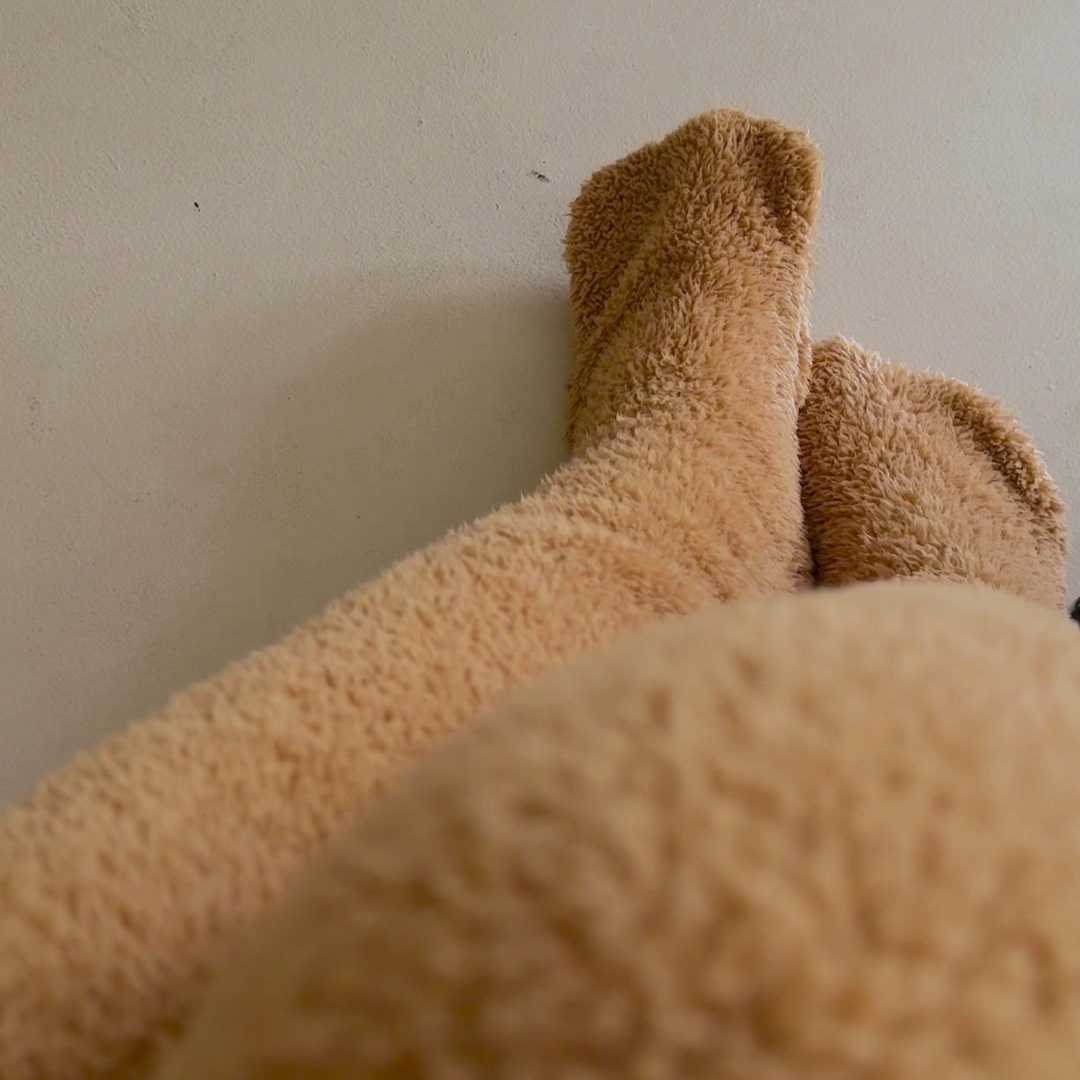
Across ten combined wash-and-dry cycles the researchers described the dimensional changes as not significant, although they recorded a small shrinkage along one fabric direction. Measured thickness increased after repeated cycles, which they suggested was probably caused by tumble-dryer fluffing.
Two limits matter more than the findings.
The first: we did not find a study that isolated wash temperature and measured what it did to the appearance, softness and elastic recovery of a finished fleece leg warmer. What did get compared was a cooler-and-shorter programme against a hotter-and-longer one, as a package.
The second is about the wear you can actually see on an old fleece: the flattened patches, the little bobbles. Repeated rubbing is a plausible contributor to visible fuzzing or pilling, but this experiment did not produce visible surface changes at the abrasion levels tested, so it cannot tell us how quickly a finished pair will bobble. A chair edge. Crossed knees. Repeated contact with another fabric. Mechanical contact occurs during both wear and laundering; the study does not tell us which contributes more to visible pilling over the lifetime of a finished pair.
What actually helps, and what you can skip
One study supports a cooler-and-shorter programme as a combined way to reduce fibre and dye release under its test conditions. It does not show that this is the best programme for preserving the pile, fit or elastic of a fleece leg warmer. None of these basic steps requires a specialist fleece-care product.
In a review on our own product page, a customer on a second pair reported that “they wash well, don’t shrink or lose their softness”. That is one person’s experience of one pair rather than a measurement, and how any pair fares will depend on how often it is worn, how it is washed and what it is washed with. It is, though, the outcome these steps are aiming at.
Products sold for fleece care may well do what they promise. Our search did not identify a study matching those products to the specific outcomes discussed here; that is not evidence that they do or do not work, so we will neither recommend nor dismiss them.
If you are choosing a pair rather than caring for one, our buyer’s guide to fleece-lined leg warmers covers length, fit and the heel question. And if the reason they are in the wash so often is that you live in them all winter, how to keep your legs warm at home covers the rest of the layers.
Visible fuzzing, flattening or pilling can develop with use and care, but the studies above do not tell us how quickly that will happen on this product.
FAQ
Yes. For our own pair we recommend 30°C, inside out, on an appropriate short or gentle programme, kept away from exposed zips, hooks and hook-and-loop fastenings, and we advise against the tumble dryer. Those are our care recommendations. If you are washing a different pair, follow whatever guidance came with that garment. One study on coloured T-shirts found less fibre and dye release with a 30 minute programme at 25°C than with an 85 minute programme at 40°C, but that comparison did not test fleece leg warmers and does not establish an ideal programme for this product.
We advise against tumble drying our pair as a precaution. That is our care recommendation rather than a measured performance result: we did not find a study that dried one batch of fleece in a machine, dried another on a rail and compared the two. For any other pair, follow the care guidance supplied with that garment. Air dry instead, and support the weight of the wet fabric rather than hanging it all from the elasticated top.