
How to Keep Your Legs Warm at Home
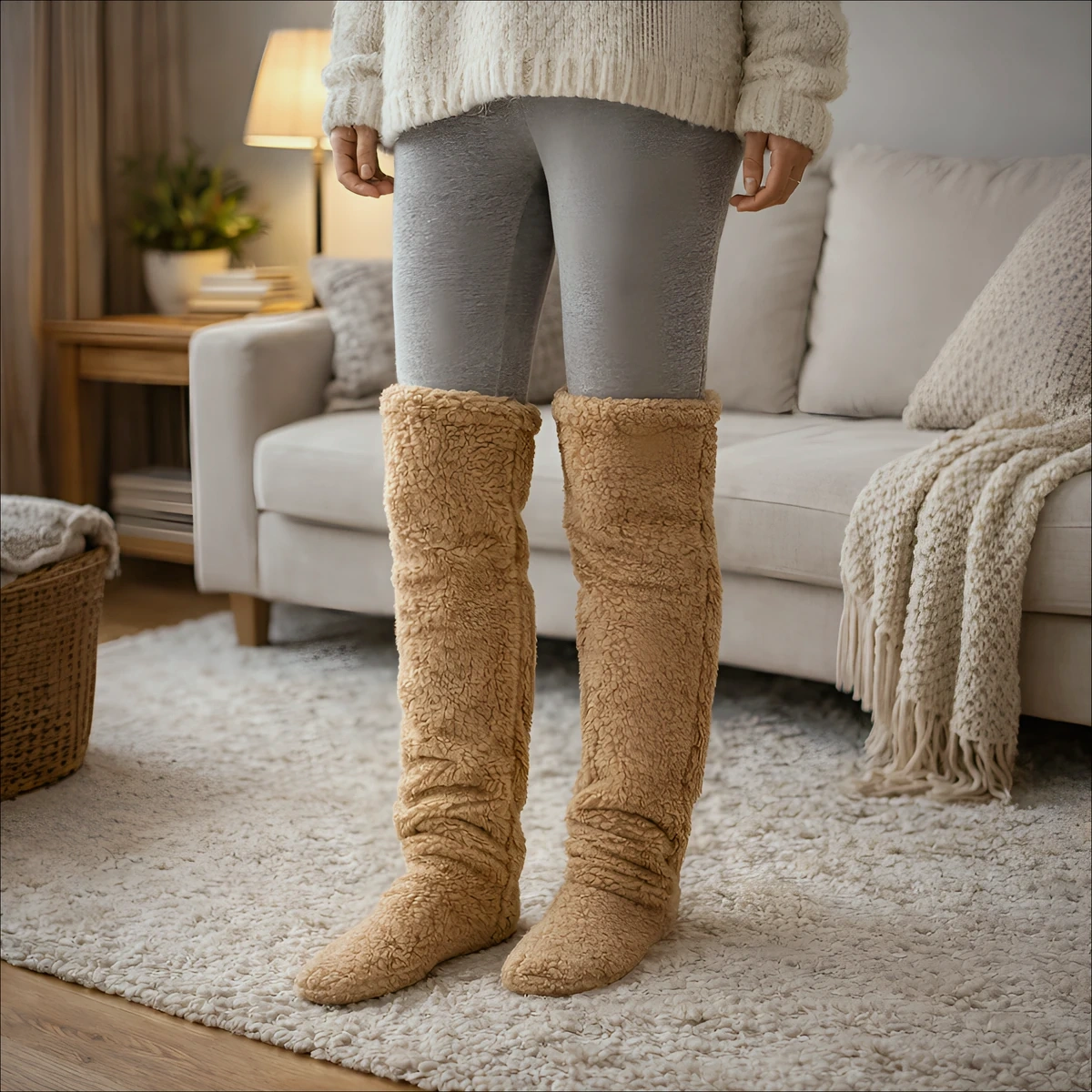
The fastest way to warm cold legs at home is to put the warmth on your legs. It sounds obvious until you notice how much of the advice about being cold indoors is about the room instead, and your legs are often the part that feels cold first when you sit still. Once the room is already at a sensible temperature, reaching to turn the thermostat up further is the reflex, and it is usually the expensive one: you pay to heat a whole room of air, most of which rises to the ceiling where you never feel it. None of this is about going without heat. If a room is genuinely cold, warming it is the fix, and the NHS suggests keeping the rooms you use at around 18°C or above. This is about the cold you still feel once the room is warm enough.
Why does my home feel cold even when the heating is on?
A room can read a comfortable temperature on the thermostat and still feel cold to you. Warm air rises, so the air around your legs and feet near the floor is often a few degrees cooler than the air at head height. Draughts from doors, windows and floorboards pull warmth away from your skin, and hard floors stay cold and draw heat from your feet.
The number on the wall measures the room, not you, and you are not one temperature. Your shoulders can feel fine while your knees stay cold, which is the flaw in the “just turn it up” reflex and in most money-saving heating lists too: they warm the average air in the room, when the cold you actually feel is sitting in one specific place the average never sees.
Why do my feet and legs feel cold first?
Your feet and calves sit at the far end of your circulation, so when you settle into a chair they are often the first to feel cold and the slowest to warm back up. That is the circulation reason your legs tend to go before the rest of you; why your legs and feet get cold first covers it properly. The part that matters here is that the knee-down stretch is often where the cold settles when you sit still, especially if it has less covering it than your upper body, so that is where a layer earns its keep. If you are not sure a layer like that makes a real difference, do leg warmers actually work walks through what to expect.
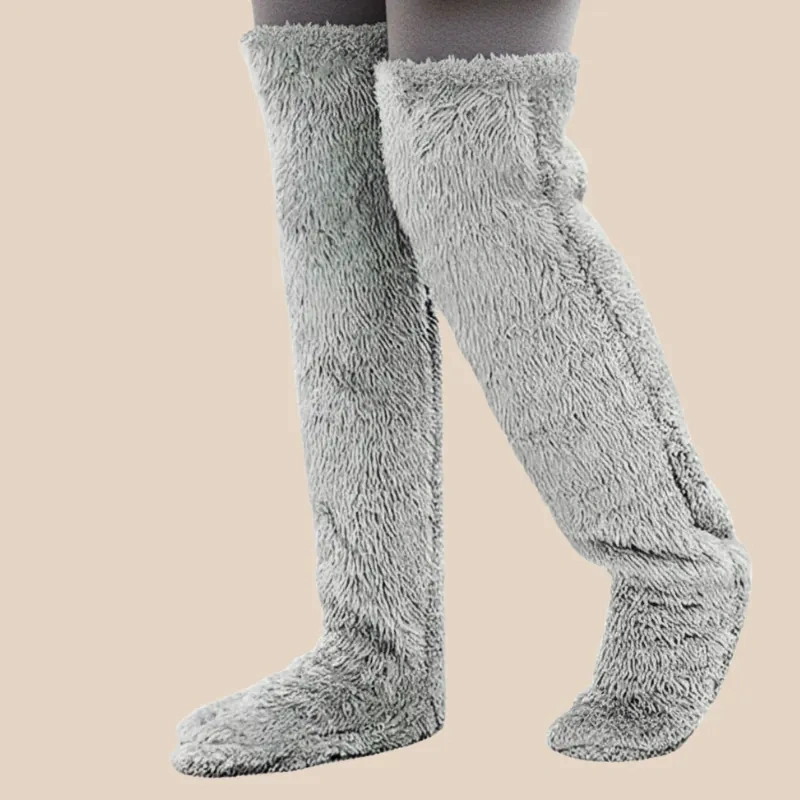
Two things make it worse the moment you stop moving. The first is that a cold body protects its core: it pulls blood inward and away from the hands and feet, which is why the extremities are where you notice the chill before anywhere else. The second is that sitting still cuts the small amount of heat your leg muscles make when they work, so a body at a desk or on the sofa is generating less warmth in the place that is already losing it quickly. Add a hard floor under bare or thinly covered feet, which draws heat out through the soles, and the knee-down stretch has a lot working against it at once. A warmer room helps with all of this. A layer just does it where you actually feel the cold, without paying to heat air that rises past you.
Is it cheaper to heat yourself than your home?
The instinct is to plug in an electric heater and warm only the room you sit in. Here is the catch the money-saving lists skip: under the Ofgem price cap electricity costs more than three times as much per unit as mains gas, so running a 2kW plug-in heater all evening can cost more than the gas central heating you were trying to dodge. The cheapest ways to stay warm break those unit costs down. Warming your body sidesteps the sum entirely: a fleece layer draws no power at all.
That is the real economy of a layer. It only warms the few square feet around you, not a room of air that rises to a ceiling you never touch, and it costs nothing per hour to run. A pair of leg warmers is a one-off cost, then nothing every evening after, covering the exact stretch of you that goes cold. If they are new to you, what leg warmers are used for sets out the jobs they do beyond the sofa. And if the idea feels a bit dated, whether people still wear leg warmers today looks at where they stand now.
This is not just the theory. One customer told us, in a verified store review, that her home is simply too large to warm evenly, the kind of space where the heat never quite reaches the far rooms. Her answer was not a bigger boiler bill. She tried one pair, felt how warm they were, and ordered two more. A home you cannot afford to heat evenly is the exact case for warming the person instead of the square footage.
Money is only half of the reason it works, though. Thermal comfort research has a name for the other half: alliesthesia, the finding that the same warm stimulus feels actively pleasant to someone who is cold, and far less so to someone who is already warm. That is worth knowing, because it means warming the part of you that went cold is not simply the cheaper move. It is the one that feels better, which a thermostat you cannot feel from the sofa will never do for you.
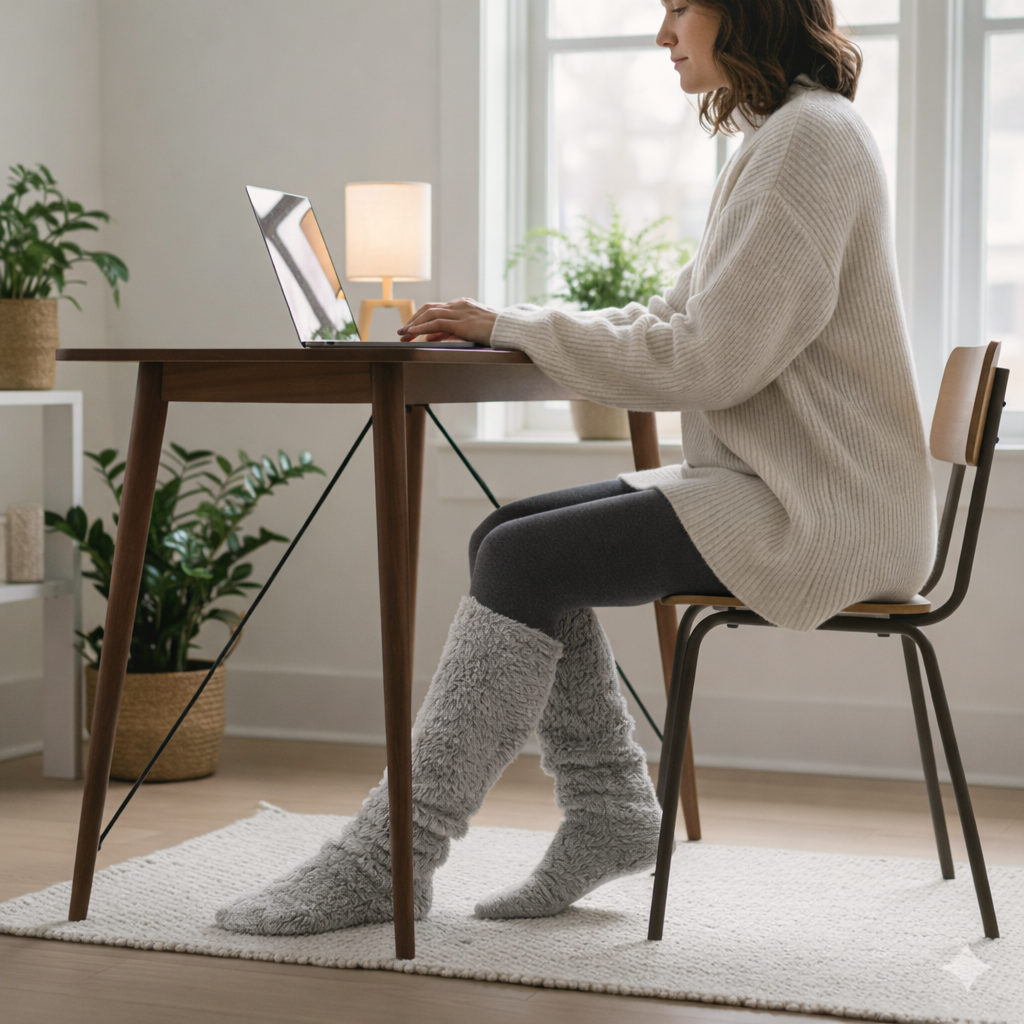
So the order is simple: once the room itself is warm enough, warm the part of you that still feels cold before you turn the dial up further. A base layer, warm socks and a cover over your legs can often see out an evening at your desk or on the sofa without nudging the setting higher, as long as the room is already at a comfortable temperature to begin with.
Small changes that make a home feel warmer
You already paid to warm that air once. A lot of it leaks through gaps you can feel, alongside the walls, roof and windows, so this part is about plugging the easy leaks rather than adding heat:
- The draughts under doors and along old window frames. A rolled towel costs nothing and stops the worst of it tonight.
- The floor. Bare boards and tile stay cold and drain heat through your feet; a rug where you actually sit fixes it.
- The glass after dark. Draw the curtains at dusk and the warmth stays in the room; leave them open and it radiates straight back out through cold panes.
- The empty rooms. Where your heating controls allow it, there is little point overheating bedrooms nobody is in, and a layer from the knee down lets you sit comfortably in a room that is already at a sensible temperature instead of nudging the dial up further.
If you want that warmth without piling on blankets, over-the-knee fleece leg warmers are made as an indoor layer for exactly this: they cover the knee down in plush fleece with a real weight to it, and are designed to stay up while you work or relax. For more, see the best fleece-lined leg warmers to look for and, if you work from home, the best leg warmers for working from home. For cosy ways to wear them around the house, see how to wear leg warmers: outfit ideas. They are not only a winter layer either: whether leg warmers still earn their place in spring covers the cooler months either side of it.
By the end of the evening it comes down to something small and specific: the cold gone out of your shins, the weight of the fleece settling over your knees, and no reason to reach for the dial, the room exactly as warm as it always was.
FAQ
Yes. They cover the lower legs, an area that loses heat quickly when you sit still, so a soft fleece pair keeps that warmth in while you work or relax at home.
They do different jobs, so it is not either-or. A warm layer covers only you and uses no energy once you own it; the thermostat warms the whole room. Use layers on top of a room that is already at a comfortable temperature, not instead of heating it, and you get the warmth where you feel the cold for far less.