
What Are Leg Warmers Used For When Your Legs Go Cold?
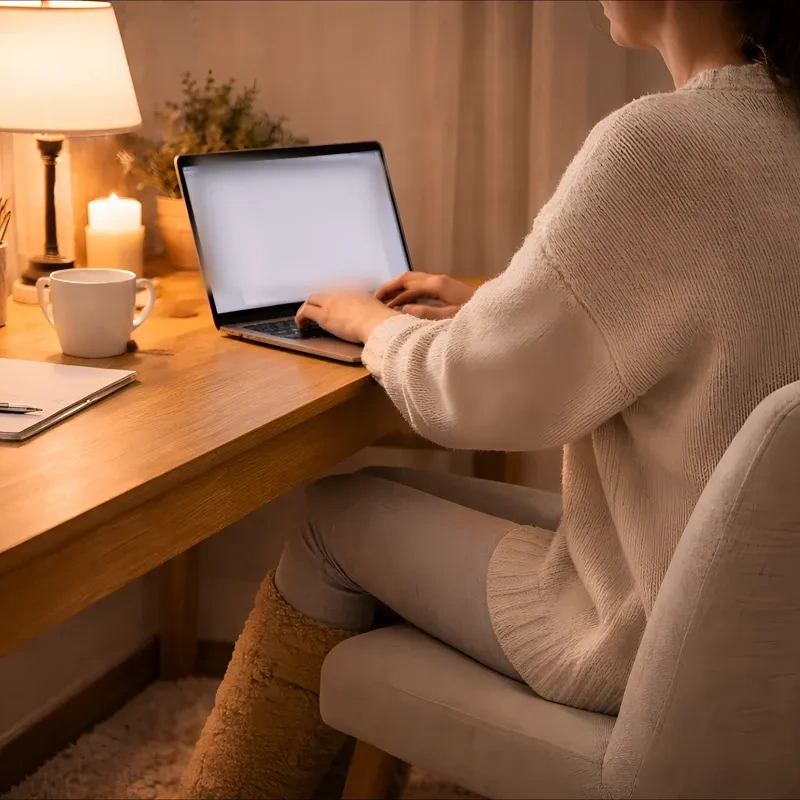
What are leg warmers actually for, if you do not dance and it is not 1984? They are fabric tubes worn around the lower leg, usually without a foot, like very long socks. People reach for them for extra warmth indoors, for dance warm-ups, for layering over leggings or tights, and for the look. How much of the leg they cover depends on the length. A short pair sits at the calf; a longer one goes over the knee.
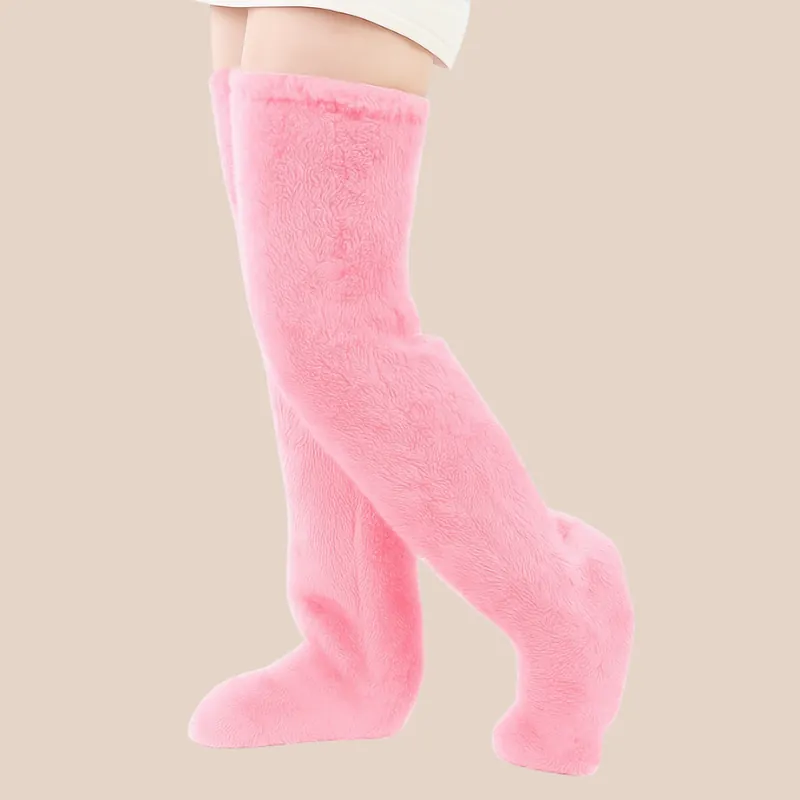
The kind described on this page is one style among several: plush fleece, over the knee, made for the hours you spend sitting still at home. It is one of the hybrids that covers the foot, with a flap you can fold under to slip your feet out. If your calves or knees are the parts that feel cold while you sit, that is the stretch it covers. How securely a pair stays in place depends on its measurements and shape, its weight and length, how well the stretch recovers, the top band and your own leg measurements. Check the garment measurements where a listing publishes them; a “one size” label or a shoe-size range does not tell you how a pair will sit on your calf.
What are leg warmers?
A leg warmer is a tube of knitted or fleece fabric worn on the lower leg. Traditional pairs are generally footless and cover the leg from around the ankle upwards, though modern designs vary in how they treat the foot. Length varies too. A short pair sits at the calf. An over-the-knee pair covers the knee as well, which is the length a fleece version uses to add coverage while you sit at home. Fabric decides most of how a pair feels, with the cut and the length behind it. Thin ribbed knit is a light layer. Plush teddy fleece is the cosy end: a raised, soft pile with a bit of weight to it.
They have been around a long time. Dancers had worn them since the 1920s to keep the leg muscles warm and flexible, and dance and fitness films moved the style into mainstream fashion in the 1980s. That story is worth a sentence, no more, and how to wear leg warmers picks it up properly.
What are the benefits of leg warmers?
The main benefit is simple. They add insulation around the part of the leg they cover, and nowhere else. Think about a normal morning at your desk. Your shoulders are fine under a hoodie. Your shins are not. The discomfort may be worse near a cold floor, in a draught, or simply from sitting still in light clothing. Another layer on top of your body does not add anything below the knee. A blanket does, but it stays on the sofa the moment you stand up to refill your tea.
Leg warmers cover that gap without turning you into a pile of layers. The fleece adds a layer over bare skin or over leggings, from over the knee downwards. Because you wear them rather than sit under them, the layer comes with you: you can get up, walk to the kitchen, sit back down, and it is still there. There is a second benefit that has nothing to do with warmth. A soft, plush layer in a colour you like is a pleasant thing to put on. Cosy and put together at the same time, rather than one or the other.
Who wears leg warmers and why?
Dancers, for warm-ups and practice. People who wear them as a styling layer over tights, leggings or footwear. People exercising in a cold hall. And, the group this page is written for, people whose calves or knees feel cold indoors while they sit still.
- People working from home. Six hours in one chair, feet barely moving, cold from the knee down by mid-morning.
- People on the sofa in the evening. The room feels fine, the legs do not.
- People in cold houses. Tile floors, old windows, one room that never really warms up.
- People padding around in slippers. A bare gap between hem and slipper is the part that feels the draught.
The common thread in that last group is sitting still in a room that is cooler than you would like, with less between your lower legs and the air than anywhere else. A wearable layer can make that more comfortable, and it is not a substitute for heating a home properly or getting the draughts fixed. Before buying anything, try the longest socks you already own pulled up over the trouser leg. Most will not reach past the knee, but they cover the lower half of that gap for an afternoon, which is enough to show you whether covering that stretch makes any difference to how you feel. If that is your morning, how to keep your legs warm at home covers the rest of the layers worth having.
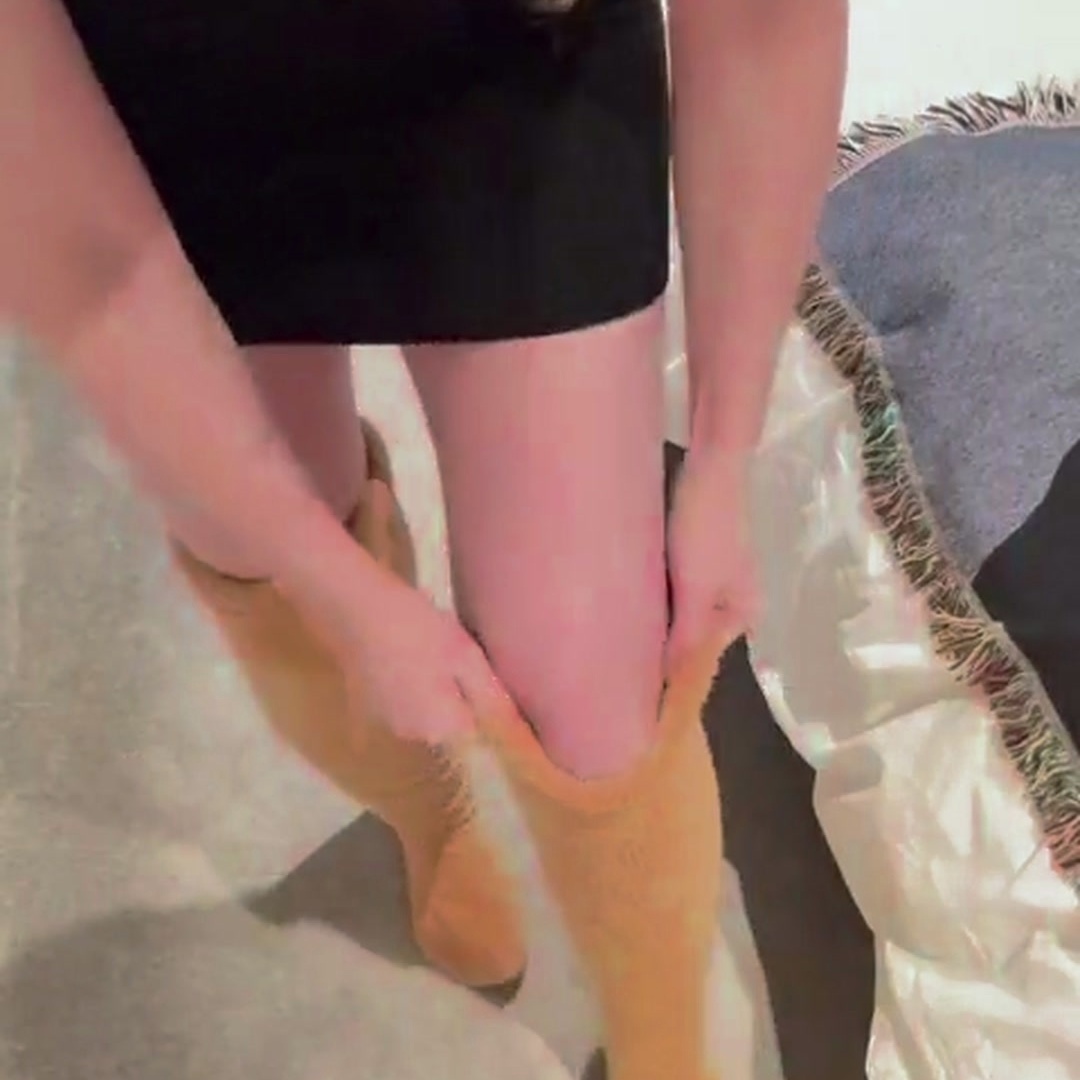
One modern version is the indoor one: over-the-knee, thick fleece, worn with leggings and slippers, or barefoot on the sofa with a mug and a candle going. Ours are that kind, and the foot section folds back, so you can have your feet in or out.
It is the middle of the afternoon and the room has not warmed up. You pull a pair on over yesterday’s leggings and add a layer over your shins. The room has not changed. What sits between you and it has. Then you go back to whatever you were doing.
FAQ
People wear them for dance warm-ups, for exercise, as a styling layer, and for extra insulation around the calves and knees. Several of our own customer reviews mention indoor warmth, though each review is one person’s experience rather than a count of who buys them. If your calves or knees feel cold while you sit, a soft layer from the knee down covers that stretch.
Traditional pairs are generally footless: they cover the calf and stop around the ankle. Hybrid indoor designs vary, and some add partial foot coverage, a strap under the arch, or leave the foot open. Check the photographs and the description. Ours are the hybrid kind: the foot section folds back, so you can have your feet in or out, and you can wear your own socks under them as long as the layers do not bunch. They are made for the house and a dry patio rather than the street, and not for wearing inside fitted boots or trainers.
Yes, over leggings or tights, or straight onto bare skin, depending on the fabric, as long as the layer underneath stays smooth. For the full run of pairings, see what to wear leg warmers with.