
Dressed Warm and Still Cold? Do Leg Warmers Actually Work?

One customer put the objection and their own answer in the same breath, in a review on our own product page. “These look quite comical wearing them but they are SO warm.”
That is one customer’s experience, not a measured warmth result, but it frames the question neatly. They look a bit silly, so do they actually do anything? If your calves or knees are the part that feels cold, leg warmers have a straightforward job: they add insulation and coverage there. Whether that makes a noticeable difference for you depends on the fabric, the fit, the room and what you were already wearing. Whether it is worth paying for is the harder question, and it turns on what the alternative costs.
What they do, and what they do not
Short answer: leg warmers can help if your calves or knees feel cold, because they add insulation to a stretch that shorter socks may leave uncovered. They do not heat the room, and they do not necessarily warm your feet. How much difference they make depends on where you feel the cold, the fabric and the fit.
Coverage is where the category divides. Some pairs are short and finish on the shin; over-the-knee and thigh-high pairs run fleece from the ankle to above the kneecap. Fabric splits it again: a thin ribbed knit is a different proposition from a deep pile with some weight to it. Those two things decide whether a pair reaches the part of you that feels cold, and whether it does anything once it gets there.
The reason one bare stretch can matter so much is simple, and you already know it from your own evenings. A cold patch can weigh on how comfortable you feel overall, even when the rest of you is dressed properly. A jumper does nothing for bare shins. You can have the cardigan, the thick socks and the blanket over your lap and still notice it, because that one cold stretch can get a louder vote than its size suggests.
That is the whole idea. It says nothing about what any particular pair will do for you, which is why the next two sections are about your legs and your evening rather than anyone else’s.
Why a thicker sock may not fix a cold leg
Another pair of thermal socks may still disappoint you, and it will not be because they are bad socks. It is about geography, not quality. Reaching for a thicker sock is the obvious move, and the right one when your feet are the problem. It is the wrong one when they are not.
Thickness adds insulation to the part that is already covered. Even a dense sock can leave most of the calf and the knee dependent on your trousers. There is more on why your legs can feel cold while the rest of you feels warm. What matters here is the geography. Buy a denser sock and you have added insulation to the foot, while the uncovered stretch above it has not changed.
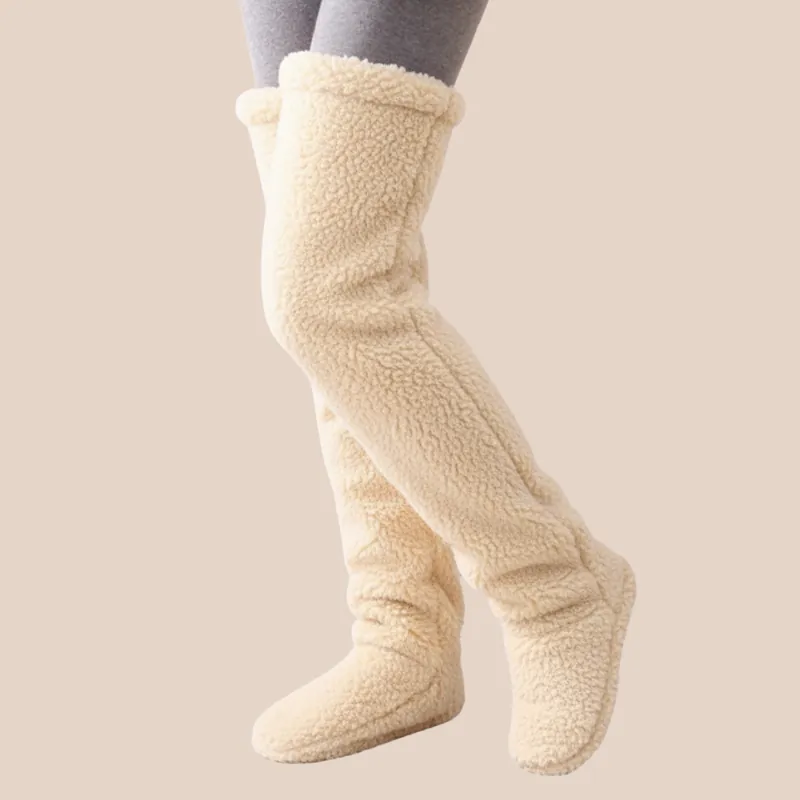
More fabric where there is already fabric is not the same as covering skin that has none. Neither is the answer for everyone: if it is your toes that feel cold, a good sock beats anything you put on your calves. The advice is usually “layer up”. The harder question is where, and how to keep your legs warm without turning up the heating covers the rest.
Test it tonight for nothing
You do not have to take my word for any of it. Pick an evening when your legs feel cold while you are sitting still. Then do this.
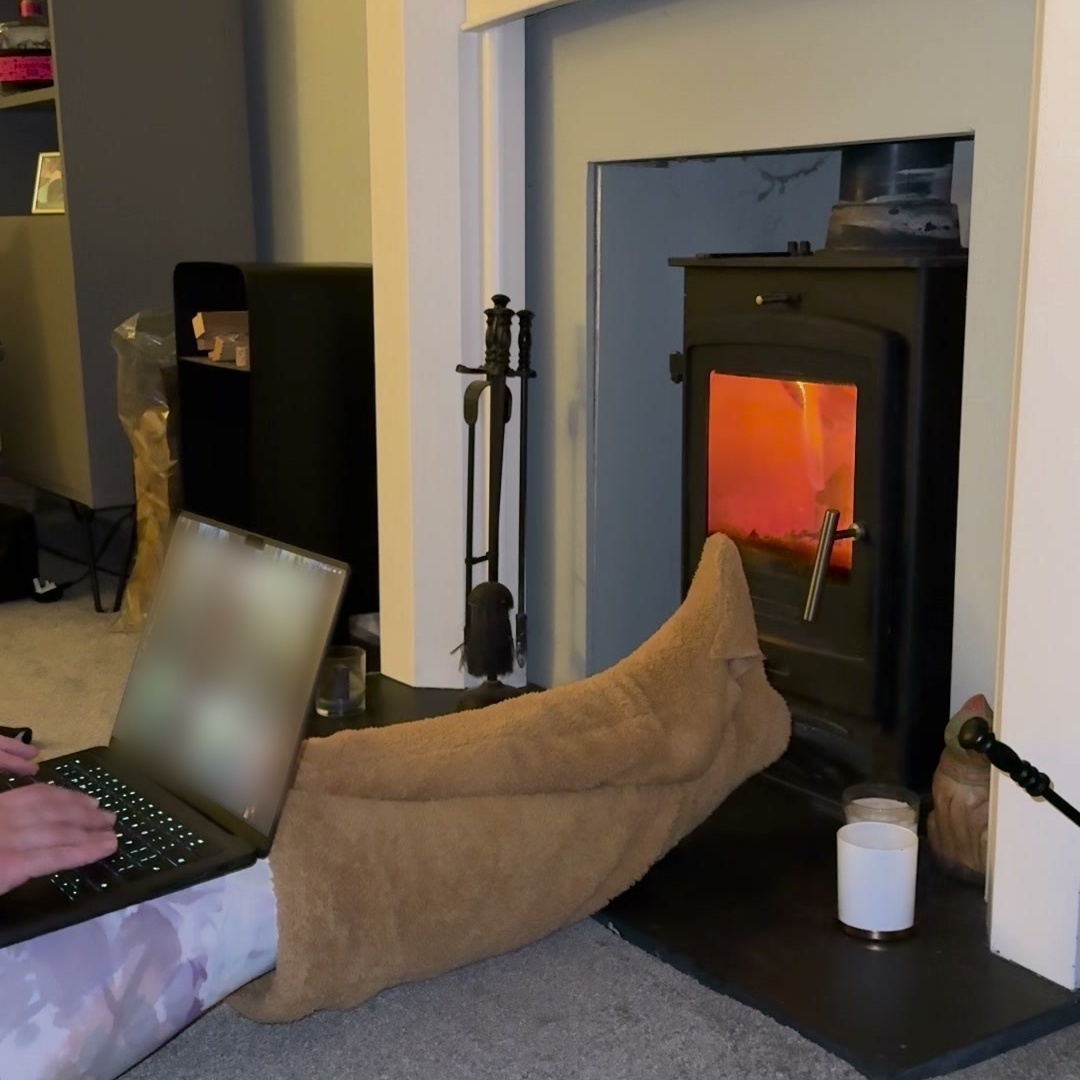
Add a temporary layer around your calves and knees, from the ankle to above the kneecap: a folded blanket or a towel will do. Leave your top half exactly as it is. Do not touch the thermostat, do not add a jumper, do not move to a warmer chair. Give it around twenty minutes.
Then check how the rest of you feels. Shoulders, hands, back.
It is not an experiment. Your room is not a lab, nothing is being measured, and knowing what you are testing colours the answer. It is a comfort check, and comfort is the thing you actually want.
If nothing changes, leg warmers are probably not your answer, and you found that out for free. And if the blanket works, but you are happy sitting with it over your knees all evening, that is also your answer. It cost you nothing. A blanket is not the same fabric or the same fit as a fitted pair, so this tells you whether covering that area helps you at all, not how any particular pair will perform. What a pair buys you is coverage of the same area without holding it in place, and without it sliding to the floor when you stand up.
What it costs
Now the money, both ways, with the caveat that the two numbers buy you different things. A 2kW plug-in electric heater running continuously at full power uses up to about 52p of electricity an hour. That is two units at about 26p each: Ofgem’s average rate for July to September 2026, on a standard variable tariff paid by direct debit (Ofgem). A thermostatically controlled heater cycles on and off rather than drawing full power the whole time, so the real hourly figure is often lower, and your region, tariff and heater setting will move it again. Our own over-the-knee fleece leg warmers cost £24.99 upfront. They use no energy while you wear them, although there is that purchase price and the ordinary cost of washing and wear. What separates a practical pair from a decorative one comes down to coverage, fit and the fleece lining: what to look for in fleece-lined leg warmers.
These are not substitutes. A heater raises the temperature of a room, for everyone in it, and a cold home needs heating. A layer insulates one person. The comparison is only fair in the case this article is about: the room is already at a sensible temperature, and you are still uncomfortable in one place.
In that case a room heater spreads its output across the wider space rather than concentrating it on one small part of one person.
The bit you actually notice
For the people it suits, it is a small moment near the end of the evening. The room is no warmer than it was an hour ago. The floor is still cold. But your shins may no longer be the part demanding your attention, and you may notice you have stopped reaching for the blanket.
There is a reason a change that small, that low down, can shift how the whole of you feels. Thermal comfort studies show that local discomfort can influence how the whole environment feels, and in cool conditions the hands and feet are often among the regions that weigh heavily on overall thermal sensation. Experiments that heated people’s feet in a climate chamber found clear improvements in local comfort and smaller improvements in whole-body comfort (study).
Two limits are worth stating plainly. Those experiments warmed the feet, while a thigh-high pair covers the calf and reaches above the knee, so evidence from heated feet is not a test of fleece around the calf. And none of that research tested leg warmers at all. It supports the broader idea that local comfort matters, not this product in particular.
FAQ
They may be worth it if your lower legs feel cold while you are sitting still and shorter socks leave that stretch bare. Test it before you spend: try adding a temporary layer around your calves and knees for around twenty minutes on a cold evening and see whether you are more comfortable. That is a comfort check rather than proof of anything.
Neither is automatically warmer. Socks cover the foot and may reach anywhere from the ankle to the knee or higher; leg warmers usually concentrate their coverage on the calves and knees. Without comparable laboratory testing we cannot say which gives more insulation for the area it covers, so the useful question is which area you want the extra layer on. For the full comparison, see leg warmers or socks.